
What does a Level Designer do?
Level designers are responsible for designing and building the spaces in which games take place. They create environments that guide the player experience through careful use of layout, obstacles, enemy placement, pacing, and visual storytelling. Good level design communicates possibility and challenge to the player intuitively, drawing on principles from architecture, game theory, and narrative. Level design is a role that sits at the intersection of game design and game art — requiring a designer’s understanding of player psychology and a builder’s ability to construct and iterate within a game engine. In Australia, level designers work across genres including action, platformer, RPG, and first-person shooters, as well as in serious games, simulation, and educational products.
What is a typical day as a Level Designer?
A level designer often starts their day in the game engine’s level editor, refining a space based on feedback from the previous day’s playtest. They spend significant time placing geometry, scripting triggers and events, and testing their work repeatedly. They review playtest data or videos, identifying where players are confused, bored, or dying unexpectedly. They communicate with the art team about environmental storytelling needs and with the design team about how their level integrates with the broader game flow. Documentation of design intent is an ongoing task throughout the day.
9:00 AM
Review playtest video recordings from yesterday — watching where players got stuck or disengaged in the jungle biome level
9:30 AM
Team standup — flag a recurring navigation problem in the central arena and discuss potential geometry solutions
9:45 AM
Open Unreal Engine and begin rebuilding the central arena entrance: widen the path, add a large rock to create a natural focal point
12:00 PM
Lunch break
1:00 PM
Script a new trigger volume in Blueprint so the camera briefly pulls back when the player enters the arena, orienting them to the space
2:30 PM
Internal playtest of the revised layout with two team members; take notes on remaining navigation confusion
3:30 PM
Meeting with the environment artist to discuss which additional props can be placed to reinforce the player path without looking too obvious
4:15 PM
Update the level’s annotated top-down map in Google Slides to reflect today’s changes; share with the lead designer
5:00 PM
Commit changes to Perforce; update task status in JIRA

What should I be able to do as a Level Designer?
Skills
- Block out and build playable levels in Unreal Engine or Unity
- Place and script gameplay triggers, enemies, and events
- Conduct playtests and iterate based on player behaviour
- Create annotated top-down layout plans and design documentation
- Use basic scripting (Blueprint, Lua, or C#) to implement level logic
- Communicate design intent to environment artists and programmers
- Analyse playtest footage and data to identify design problems
Knowledge
- Spatial reasoning and principles of player navigation
- Game pacing, challenge curves, and player psychology
- Genre conventions for the type of game being developed
- Level editor tools in Unreal Engine and Unity
- Environmental storytelling techniques
- Basic scripting and how triggers and game events work
- The difference between block out, art pass, and final polish stages of level production
Typical salaries for Level Designers in Australia
All salaries are approximates based on recently advertised positions in Australia.
$0k
Entry-level (0–3 years)
$0k
Mid-career (4–9 years)
$0k
Senior (10+ years)
Software used by Level Designers
The software used by Level Designers is highly specialized. The more platforms you are trained in, the more valuable you will be to an employer. Level Designers may need knowledge of a combination of the following software.

Unreal Engine for Unreal Engine
Game development

Unity Engine for Game Development

Maya for 3D Modelling, rigging, animating, lighting and rendering

ZBrush for High-detail sculpting and texturing

Substance Suite for High detail materials and texturing

Adobe Photoshop for Concept art and texture maps

Visual Studio for programming

MonoDevelop for programming

Perforce for project management and version control

Git for project management and version control

Source Tree for project management and version control

Microsoft Office for project management and planning
How to get a job as a Level Designer
- Build and release levels for existing games using official modding tools (e.g. Counter-Strike, Skyrim, Unreal)
- Document your levels with annotated maps, design intent notes, and before/after iteration comparisons
- Play a wide range of games and analyse their level design critically in writing
- Participate in game jams and design complete levels under time pressure
- Share your work and process on ArtStation, itch.io, or a personal website
AIE courses for Level Designer
Do you have what it takes to be a Level Designer?
Read the points below and if these sound like you, Level Design could be a great option!
- You think about how spaces make people feel. Whether it is a room, a park, or a game environment, you notice how layout and sight lines influence movement and mood.
- You have played games and found yourself thinking about how the level was designed. You notice where a light draws your eye, or why a corridor creates tension.
- You enjoy both creating and problem-solving. Level design requires thinking through how a player will navigate your space, not just how it looks.
- You are interested in player psychology. Why do players go left instead of right? What makes a space feel rewarding to explore?
- You have used map editors, Minecraft, or similar tools and found yourself deeply absorbed in creating spaces for others to navigate.
- You enjoy building things and testing them immediately, even before they look polished.
- You can think simultaneously about individual encounters and the overall arc of an experience.
Level design is one of the most accessible areas of game development to explore before formal study. If you build things in games, sketch maps on paper, or find yourself absorbed in the spatial logic of an environment, that curiosity is your most important credential.
Hear from Level Designers
The Best of 2024...

The Student Experience: Studying at AIE...
Study Game Design in High School...
What does a Product Manager do? Hear from...
Welcome to 2024 with AIE...
Women in Games with AIE...
Indie Game Development: AIE with RepairFour Interactive...
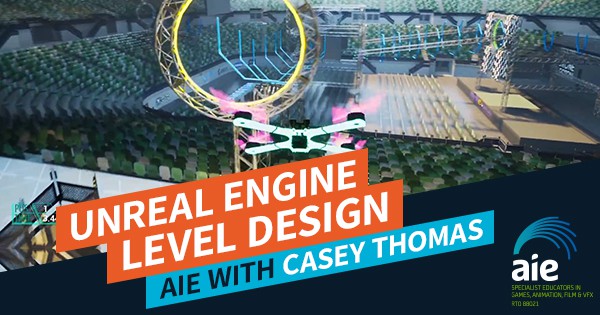
Unreal Engine Level Design: AIE with Casey Thomas...
Game Designer & Product Manager: AIE with Tessa...
Game Designer: AIE with Rebekah Little...
Meet the Indie Devs: Mini Mammoth Games...
Student Takeover: Game Major Project...
Meet the Junior Level Designer: Mitchell Sayer...

Meet the Producer: Beau Bradburn...
Meet the Future Experts: Jazmin Fazzolari-Dusik & Victoria...
Meet the Junior Game Designer: Alexander McGarrity...
Meet the Project Lead: Darcy Smith...
Meet the Team: Me Myself & Die...

Meet the Designer: Megan Ralph...
Browser Games to AAA Titles: Becoming a Game...
My Journey into Unity Game Development – Riley...
My Journey into Virtual Experience Design – Adam...
My Journey into Leading a Studio – Ryan...
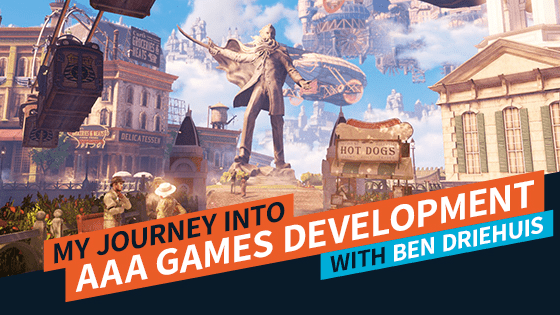
My Journey into AAA Games Development – Ben...
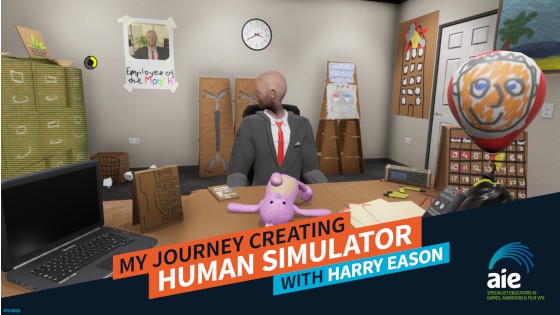
My Journey into Building Human Simulator – Harry...
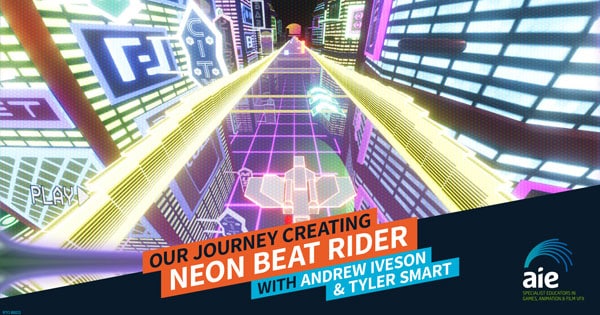
Our Journey Creating Neon Beat Rider...
My Journey into Game Design – Nicholas Amzallag...
How to become a Level Designer
- Bachelor of Game Development (Major in Game Art, includes animation) – AIE Institute (CRS1400953)
- Advanced Diploma of Professional Game Development (Game Art & Animation) – AIE (11151NAT)
- Game Design Foundations – Certificate III in Design Fundamentals (CUA30720)
Upcoming Events
Discover more at one of our events
AIE runs campus and online events throughout the year and we encourage students to attend. AIE also broadcast regular livestreams with our alumni and industry professionals that provide insight into future career paths.
Open Day
November 21, 2026
Discover the courses designed to get you started in game development, 3D animation and visual effects at the AIE Open Day. Find out about full-time and part-time courses starting soon.
Starts at 10am
Roles related to Level Designer in the industry
Find out more
Download our course guide to see how we can help you on your pathway to your dream career.
Get Your Course Guide and Take the First Step
There’s a lot more to explore in the full course guide, and our admissions team will be there to help if you have any questions.
"*" indicates required fields