
Kesley Birrell
Credits include:
How to Train Your Dragon

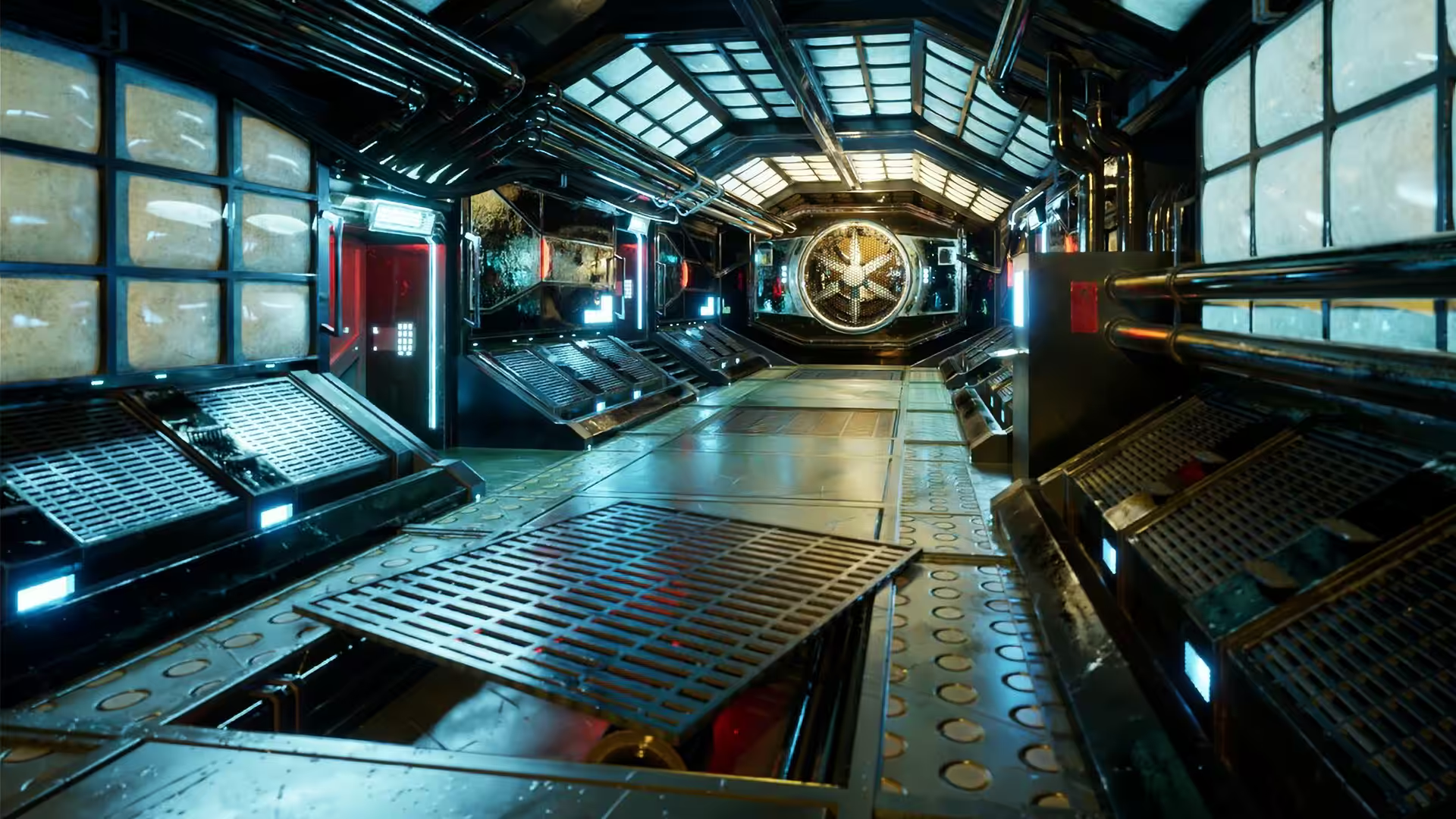
Game designers are the visionaries and evangelists for a game development project.
They thrive on new ideas and are always thinking about how users will interact and enjoy the experience that they’ve created.
Overview
Build the practical and theoretical foundation to work as a professional game designer — from core mechanics and level design through to production and playtesting. You’ll graduate with a strong design portfolio and the research, communication and critical-thinking skills that come with a Bachelor Degree.
You’ll learn directly from industry professionals, working across the same engines and pipelines used in professional studios, while collaborating with art and programming students on real game projects. Alongside your design specialisation, you’ll build broader knowledge in user experience, project management and software development — giving you a wider range of entry points into design, systems and production roles across the industry.
Your career in Game Design starts with AIE Institute’s industry-connected Bachelor Degree.
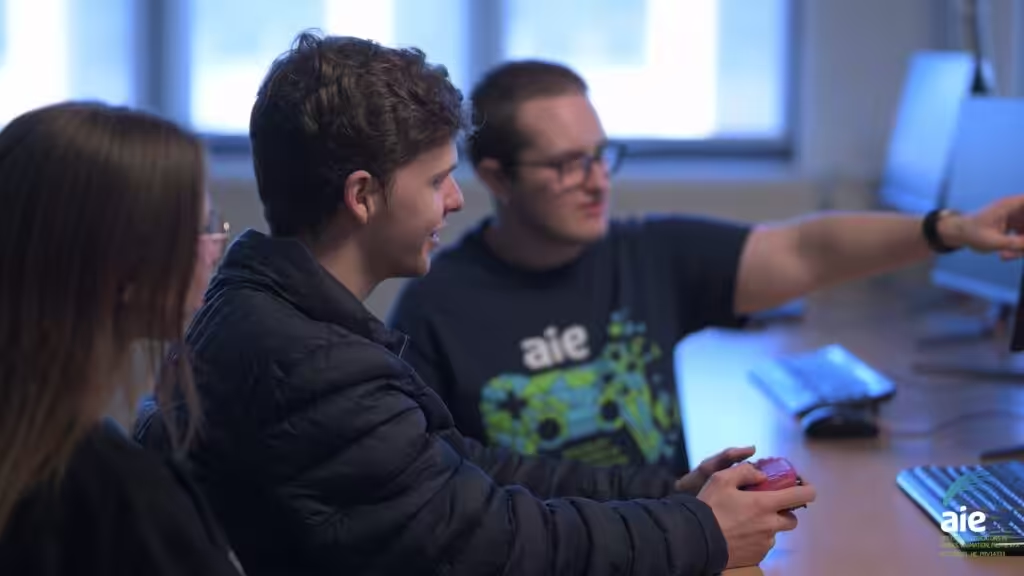
Course information
| Length | 3 year program |
| Curriculum | Practical skills and in-depth focus on theory and research |
| Projects | 6 Cross-stream game dev |
| Subjects | 4 subjects studied simultaneously per semester. Internship* in third year OR continuation of game production capstone project and two elective units |
| Funding | Approved for FEE-HELP |
This degree will build your knowledge and practical skills to pursue a career in the design and production of games. Develop your storytelling and user experience skills to produce unique interactive experiences. This three-year degree covers all the core topics covered in the Advanced Diploma and takes it to the next level. Not only will you cover specialist design units, but you will gain broad expertise in graphic design, game art and systems design to power you in your game development journey.
| Course Name | Bachelor of Game Development Major in Game Design |
| Course ID | CRS1400953 |
| CRICOS Course Code | 108905F |
Subjects
Students complete practical game art projects based on industry standards along with written coursework to develop in-depth and up to date knowledge. This course work includes research papers and essays which assess your ability to research, critically analyze, and effectively communicate your ideas and arguments.
In GDC101 Introduction to game art, you will learn the fundamentals of the game art pipeline. You will develop an understanding of key areas within the game art pipeline including 3D modelling, texturing, materials, rigging, animation, and lighting.
In this subject, you will create two 3D models textured and presented in Unity, one of which includes animation. The assessment also includes a peer review report and completion of weekly tutorial tasks.
Introduction to Game Design introduces the methodologies and common language used by designers to make games. You will understand how to analyse and respond to feedback objectively when presenting ideas and concepts to your peers.
You will create and maintain design documentation, effectively identify, communicate and resolve technical issues, refine mechanics, scope and gameplay requirements through design iteration.
You will learn how to identify and analyse your target market understanding business models for distribution, monetisation and player retention.
GDC100A is a cross-disciplinary unit that focuses on game development in a team-based environment. In this unit, you’ll learn the basic concepts of project management and the different roles involved in game development. You’ll explore the pre-production stage of game development, including prototyping, proof of concept methodologies, and game documentation.
Through this unit, you’ll develop essential skills in communication, teamwork, and self-management. You’ll gain an understanding of different game development methodologies and learn how to work efficiently in a development environment. You’ll also learn how to effectively manage a game project, creating some of the pre-production documents that AAA game studios use during game development.
GDC103 offers an introduction to rapid prototyping and game programming using visual scripting. You will learn about the process of developing games in the Unity game engine, as well as foundational programming logic and design concepts. The subject emphasizes rapid prototyping using visual scripting, ethical considerations related to software licensing, and programming for diversity, including supporting disabled players through input and user interface design. You will be introduced to the theoretical and practical aspects of programming games in Unity, including scripting events, processing player input, building for different hardware, software licensing, IP rights, graphical user interfaces, and implementing basic game mechanics using visual scripting.
In this unit, building of GDX101, you will further explore level design theory and examine the evolution of game engine technology commonly used by today’s developers, understanding game engine concepts and terminology and the role of a designer within a game development environment. You will learn how level designers conceptualise and prototype levels using game engines and 2D and 3D software packages, and you will be introduced to the methodologies and toolsets that take a level design from paper to playable build. You will also examine some of the fundamental concepts used in level design to deliver a logical, consistent and fun player experience, and examine the relationship between mechanics and environment, the role of the camera and the impact of light and sound in game environments.
In this subject you will learn the principles and visual communication used in graphic design and how these foundations apply to game art and game design. Students will develop an understanding of art movements and influences they have on game art, colour theory, visual hierarchy, composition, and marketing for games.
Assessment for this subject is based on understanding of visual design and aesthetic principles as you work to a specific design brief to create a digital promotional poster for a game. You will also write a research report on the influence of art movements in games and create an effective game style guide based on a provided brief.
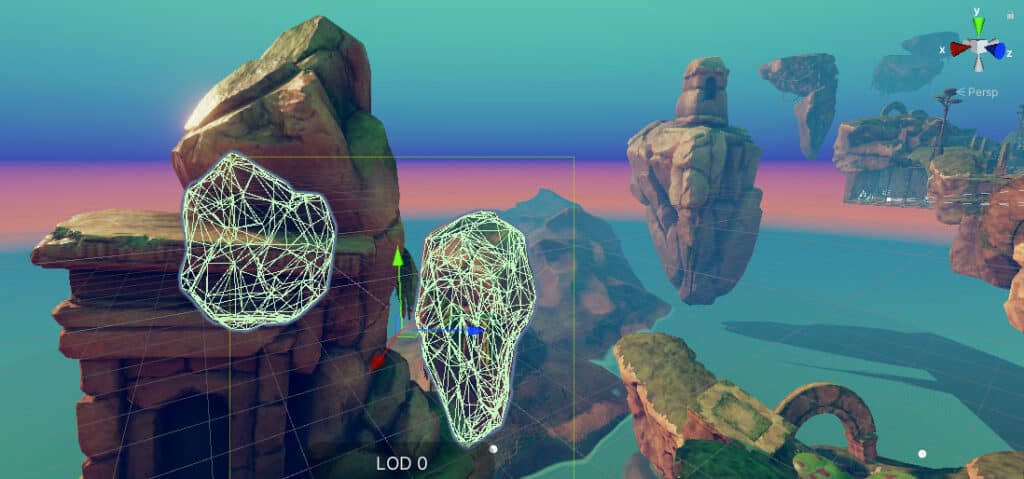
In GDX103 Art Optimisation Techniques, you will delve into the world of creating optimised and efficient game art for real-time purposes. The technical understanding of how art assets impacts performance, and ways to optimise assets for efficiency, is essential for any artist working in the games industry. In this subject you will learn about graphic rendering pipelines, how to analyse and using profiling tools, mesh optimisation and level of detail, culling, draw calls, texture formats, mipmaps, modular assets, and instancing.
Students will be assessed through optimising and increasing efficiency on a game project by analysing performance, reporting findings, identifying solutions, and implementing changes. Students will also create two optimised 3D models suitable for low end platforms and devices.
In this unit, you will learn how to develop a 2D game prototype using agile development methodologies and effective teamwork. Building upon skills learnt in GDC100A, you will use a game engine to design a basic level and iteratively produce a game prototype with other team members who have diverse skills in game art, design, and programming.
Through the group project, you will gain fundamental knowledge of group dynamics, problem-solving, and version control repository management. You will learn to communicate and work effectively in a team environment, evaluate team performance, and provide constructive feedback to your peers in a professional manner.
This unit is crucial for anyone interested in pursuing a career in the game industry. It will teach you the skills required to work effectively in a game studio environment, including agile development methodologies, playtesting, and game prototype development. You will be assessed on your ability to create an initial game prototype and a final game prototype as a team, as well as present your work and evaluate your team’s performance.
In this unit, building on what you have learnt in GDD101 Level design theory, you will develop solid skills and knowledge of interactive narrative theories and storytelling in games, and learn the different ways narrative can be utilised in the context of an interactive medium. You will critique a range of game story structures and genres and evaluate the aesthetic, cultural, ethical, diversity and theoretical developments in interactive narrative. You will analyse how the design, environment, mechanics and story of a game create a cohesive game play experience that encourages player exploration and discovery.
You will examine some of the common character archetypes and popular narrative tropes used in games and the implicit and explicit narrative techniques employed to generate and develop narrative designs.
In this unit you will explore the key principles and theories of human-computer interaction (HCI) and study user experience (UX), user interface (UI) and gamification concepts to design interfaces for interactive systems. You will learn about input/output (I/O) channels, interaction models and frameworks, memory and information processing in humans and computer systems for the development of intuitive interfaces that users can easily grasp and control.
You will also develop skills in articulating and critically evaluating UX design ideas and practice wireframing to creatively solve UI design and gamification problems by redesigning and prototyping new experiences. You will adapt your UX knowledge and skills across diverse enterprise contexts that underpin the development of digital games and applications.
In this unit you will build upon your existing skills and knowledge of game mechanics in GDD101 Level design theory and GDC103 Introduction to game programming, demonstrating broad technical and theoretical knowledge of game systems and state machines. You will examine intermediate system design principles and how a game system is made up of individual parts that communicate and interact with each other through their own internal states and behaviours.
Through understanding game systems and their subsystems, you will learn how to create and affect emergent gameplay and how to improve game designs by designing and developing interconnected and extensible game systems capable of both persistent and adaptable functionality using iterative and incremental system design principles. You will compare and contrast systemic game design methodologies, reviewing examples of game systems designed for specific game genres and examine games that have improved on these systems to create new and interesting game feedback loops.
Building on the knowledge and skills gained in GDC100B Game development project 2, you will work in a team to design and develop a 3D narrative-based game and produce more complex game documentation including a game design document, art bible and technical design document, and evaluate other teams’ games through pilot playtesting and critique. You will adapt the scope and focus of your project using iterative system design principles throughout development, focusing on an initial, simplified implementation that progressively gains more complexity and a broader feature set until the final system is complete. You will obtain weekly feedback from a supervisory team of academics, regarding the project in progress and utilize this feedback to develop next iteration of the prototype.
You will further develop your teamwork skills forming an interdisciplinary team and demonstrate intermediate level design skills through the creation of a game concept. Your team will draft the system architecture and produce a level of the game prototype using a commercial-level game engine. The group project will utilise the individual skills of team members in game art, design and programming to collaborate effectively on the final product in a studio-simulated environment. Your individual contributions will form part of your professional portfolio.
In this unit, you will extend your understanding of 3D modelling by demonstrating advanced skills and knowledge in grey-box level design and UV mapping techniques for the application of textures to a 3D model. Building upon what you have learned in GDD101 Level design theory and GDC101 Introduction to game art, you will apply the principles of game art to efficiently create 3D models for proof of concept (PoC) of your game design vision. To enhance rapid PoC development, you will also learn modular level design and rapid prototyping techniques for the quick iteration and turnover of your level design ideas in response to player input and feedback.
By the end of this unit, you will be able to create, evaluate and improve on your level design environments and understand the export process between a 3D modelling package and a game engine.
In this unit, you will build on skills and knowledge gained in GDD101 Level design theory. Using evaluation methods taught in GDC201 Human-computer interaction and user experience design, you will develop skills and knowledge in Quality Assurance (QA) principles and gameplay testing, and integrate these with your team management skills. You will critically evaluate key quality assurance concepts and liaise with other students who will play the role of your clients and identify issues and items that require testing, and seek approval from those clients to proceed with testing. You will also undertake responsibilities in team management, the creation and maintenance of documentation and testing plans, and the delivery of completed product testing and reports. Your research and market analysis skills will be developed and applied to provide effective feedback to clients in regard to their products and markets. Your self-reflection and written communication skills will also be consolidated through the documentation of product testing outcomes and the production of detailed reports for clients.
Expanding your knowledge of GDX102 Graphic design principles and GDC201 Human computer interaction and user experience design, this unit explores graphical user interface (GUI) design concepts in video games with a primary focus on the methodologies used to implement creative, practical and efficient graphical user interface design solutions in games.
You will examine popular game devices and compare and contrast the limitations imposed on player control methods and usability, identifying the solutions designed around bespoke platform user interface design and peripheral functionality. Having the skills and knowledge to identify and implement player-centric design principles will help you to ensure that the human-computer interaction component in your GUI design is intuitive and logical and translates directly to your target audience.
You will examine the principles of visual periphery and compare and contrast the functionality of screen and world spatial GUI solutions including the diegetic and non-diegetic designs applied across competing hardware platforms. You will demonstrate your skills and knowledge in player-centric design and the design of graphical user interfaces by submitting a GUI wireframe. You will also critically evaluate and self-reflect on your work in a written report.
In this unit, you will build upon the 3D prototype designed in GDC200A Game development project 3. You will gain intermediate level knowledge of project development while leveraging technical skills in your area of specialisation to complete and deliver the vertical slice and produce detailed game documentation and a post-mortem. In a studio-simulated environment, you will work in groups to manage the continued production of a 3D narrative-based game using a commercial-level game engine, exploring the quality assurance process and the production and post-production stages of game development such as scheduling, budgeting, marketing and playtesting to produce a vertical slice of the game.
You will adapt the scope and focus of your project using iterative system design principles and utilising weekly feedback from a supervisory team of academics regarding the project in progress, you will develop the next iteration of the prototype.
You will further develop your teamwork skills through the creation of a game concept. In addition to developing your project you will be involved in providing constructive feedback to your peers in a professional manner at the end of this unit.
Digital games are intensely intertwined with sociology, anthropology, political science and history. It is the job of the analyst to explore and deconstruct those connections. Critics, writers and creators of culture have developed approaches for the study of other cultural forms (literature, film, the visual arts, theatre, etc) which can be tentatively applied to the study of games; theorists have also begun using digital games as the basis for creating new models of criticism and challenging existing models and divisions.
In this unit, building on your knowledge of GDC201 Human-computer interaction and user experience design, you will learn a more sophisticated critical and philosophical vocabulary to investigate the significance of digital games in contemporary culture and produce new critical perspectives exploring concepts such as ethics, gender and diversity, monetisation, narrative, character design and agency with reference to both traditional and new media. You will analyse case studies on digital games and reflect on how they contribute to the history of media and cultural transformation in game design, critique game design examples and provide constructive feedback to your peers while developing advanced analytical and evaluation skills to reflect upon and document your own ideas. You will also be expected to apply judgment to evaluate the design and development of innovative game concepts, use game analytics and evaluate ethical behaviour across a range of games in a presentation to your peers.
This unit builds on the concepts of gameplay introduced in GDC102 Introduction to game design and explores digital games and their social, cultural, psychological and ethical impacts on society. You will be introduced to theories of the social context of play and examine its relationship to digital gameplay, the player experience and human wellbeing, and evaluate how games can be used as positive tools for wellbeing.
Through a critical examination of existing literature, you will identify an area of societal wellbeing where games are not being applied to address social, cultural, psychological or ethical issues. To bridge this gap, you will design a game concept to meet the needs of this particular population. You will also develop skills in articulating ideas for innovative game concepts for wellbeing and be able to reflect upon and document your own ideas with reference to existing theories.
Virtual reality (VR) provides highly interactive and seamless immersive experiences and augmented reality (AR) technology allows users to interact with virtual objects, people and settings that have been overlaid onto real-world environments, augmenting user experience with computer-generated imagery and sounds. In this unit you will explore the pioneering developments in visualisation, immersion, and interaction to investigate innovative concepts and implementations in VR and AR. You will learn how simulation techniques are used to build virtual worlds in which users are immersed to deceive the human senses so that the perceptual cues that reach the brain are aligned with an alternative reality.
You will develop knowledge of a range of hardware and software available to game developers to produce immersive experiences in mixed media and examine state of the art methods for real world motion tracking to enable augmented spaces. Through a critical analysis of contemporary VR and AR technologies and applications in advergaming you will explore the design principles and content creation process for developing VR and AR applications by designing and deploying your own innovative concept in a group project.
This unit is the first part of the capstone project in which you will work in a studio-simulated environment on the production of a potentially commercially viable product. You will consider human computer interaction and user experience design in game development, applying the tools and techniques necessary to design novel gameplay experiences. You will explore technological advances, propose new techniques for human-computer interaction in a game development project.
You will work through aspects of the industry-based game development cycle, building on the knowledge and skills gained in GDC200B Game development project 4 and GDC201 Human-computer interaction and user experience design to further develop your teamwork skills and demonstrate advanced level design skills through the creation of an alpha version of an original and innovative game. The group project will utilise the individual skills of team members in game art, design and programming in collaborating effectively on the final product in a studio-simulated environment. Your individual contributions will form part of your professional portfolio.
You will be working more independently, while receiving feedback from your supervisor as a group, and utilising the skills you have gained to create a game that will form the heart of your portfolio. You will also provide constructive feedback to your peers in a professional manner and reflect upon and document your own performance and role in this project.
This unit provides an opportunity for students to complete work-integrated learning (WIL) through a full-time internship (36hrs/week) over the course of a semester. The unit will help you gain local professional experience in the game industry and choose from a diverse range of roles. You will need to apply for an internship position with an industry partner of AIE Institute or present an organisation and project for approval. If selected, you will undertake professional responsibility for a range of tasks and duties at a workplace in the game industry. For the major part of the unit, you will work with both an Industry Mentor (the nominated representative of the internship location) and an AIE Institute WIL Coordinator to complete a major internship project or a few smaller game development projects.
Project topics will be agreed between the AIE Institute, the student and the industry partner, and will also include playtesting. The specific work projects/ and related duties you will undertake will be determined in consultation between you, your Industry Mentor and AIE Institute to ensure appropriate standards are maintained and the internship project/s and related tasks align to the course learning outcomes.
Throughout the internship, you will be expected to maintain communication with your WIL Coordinator via email. You will be required to submit internship reports that reflect on your learning during the internship.
* Limited positions may be available, and a selection process applies. Learn more here.
OR complete GDC300B Major game production 2 and two Elective Units
This unit is the second part of the capstone project building upon skills learnt in GDC300A Major game production 1 and progressing the alpha version of the game your team developed. You will progress through the industry development cycle to the completion of a publishable gold version. You will demonstrate advanced level knowledge of project development while leveraging technical skills in your area of specialisation, deliver game documentation and a post-mortem. You will apply professional level teamwork and project management skills and demonstrate advanced level design skills during the development and completion of the game.
You will also apply basic business planning skills to pitch a business plan, explore production and post-production stages, and complete your individual professional portfolio. You will be working more independently, while receiving feedback from your supervisor as a group, and utilising the skills you have gained throughout your study.
The final stage of the project requires you to provide constructive feedback to your peers in a professional manner and reflect upon and document your own performance and role in this project from initial design in GDC300A to final completion.
Shaders are user-defined programs designed to run on a graphics processor to execute one of the programmable stages of the rendering pipeline. In this unit, you will study the history and evolution of shaders in video games. Building on your knowledge of GDX103 Art optimisation techniques, in this unit you will explore some of the key advances made in shader graphics and become familiar with the industry pioneers who have influenced and contributed to the technology used by many contemporary game engines. You will review the introduction of hardware acceleration, the competing Open GL and Direct X APIs and the resulting GPU wars of the late 1990s that would ultimately shape the computer graphics landscape for the next two decades.
You will develop the skills and knowledge to design and create custom shaders in a game engine using current tools and techniques. Analysing the basic structure of a shader script, you will learn how today’s shaders can be easily assembled and modified in a game engine using visual editing systems. On completion of this unit you will understand the history and evolution of shader technology and how to develop and modify basic shader materials for game designers and game artists through practice-based exercises.
GDP205 is a fascinating subject that explores computer graphics using shaders, an essential component of modern video games. The subject delves into the techniques and algorithms used in real-time rendering of computer graphics, with a strong focus on shader programming. Shaders are user-defined programs that run on a graphics processor and execute a programmable stage of the rendering pipeline. Students will gain a thorough understanding of how graphics are created and displayed in modern games and learn how to take control of graphics hardware to optimize performance. They will also get hands-on experience in writing graphics shaders using GLSL and HLSL shader programming language within the Unity 3D game engine.
GDP205 is highly relevant to the video game industry, as advanced techniques and algorithms used in modern real-time rendering are necessary to create high-quality visuals in modern games. Shaders and optimized performance are crucial skills for graphics programmers to have to take control of graphics hardware and provide players with an efficient and visually stunning experience. Students will gain these essential skills and knowledge through GDP205, and the practical assessments, such as writing a surface shader, a terrain shader, and a shader optimized for mobile platforms, will provide them with the experience and portfolio of work that they can use to showcase their abilities to potential employers.
Good lighting and visual effects (VFX) can have a big impact on the look and feel of a game. Lighting and VFX not only unify visual elements within a game environment, they also bring a game world to life, creating a more engaging and immersive experience for the player. In this unit, you will extend your understanding of digital lighting from GDX103 Art optimisation techniques and develop the skills and knowledge to create both basic and advanced particle systems as well as explore physics and simulation for games.
You will learn about the physical properties of light, how light interacts with materials and the fundamentals of lighting design for games. Through researching and analysing lighting design in existing games and undertaking practical lighting studies, you will learn how to apply initiative and judgement to a range of techniques within a game engine to achieve lighting for different scenarios and applications. You will also learn about different kinds of VFX for games and how they can breathe life into environments, enhance game feel and create a more immersive experience for the player.
This unit will explore the nature of entrepreneurship and the role of the entrepreneur in pursuing innovative game concepts and technologies. You will extend your enterprise and business planning skills to cultivate and exemplify your identity as a professional practitioner by pursuing innovative game concepts, together with learning how to analyse case studies and conduct market analysis to develop strategic business plans.
This unit will include seminars and guest lectures given by established game development entrepreneurs, who will touch on key challenges experienced by start-ups including funding. Through multi-disciplinary teamwork, oral and written communication, and self-management skills you will collaborate on developing a business plan for a game start-up or technology and deliver a game pitch to an industry panel. You will also evaluate and peer review other teams’ business plans and pitches.
Sound plays an important role in the interactivity and immersion of digital games, as a player’s actions can trigger dialogue, sound effects, ambient sound, and music. In this unit, you will develop the skills and knowledge to design, generate and manipulate audio elements for sound in video games. You will incorporate middleware and Digital Audio Workstation (DAW) software solutions to prepare audio and sound effects in a game engine while learning concepts and principles of sound and acoustic behaviour in an interactive environment. You will also gain an understanding of audio recording and layering techniques, sound editing and production workflows. You will apply basic programming functions to script game object components and trigger sound events in real-time while considering performance optimisation and compression requirements to improve CPU and memory performance applicable to the development target platform.
By the end of this unit, you will have the skills and knowledge to prepare audio resources; edit and implement real-time sound events for character, animation and environments; understand the roles that music, dialogue and sound effects play in communicating narrative storytelling and how these sound components can affect gameplay and direct player decision-making.
Entry requirements
We’re looking for your passion, creativity and commitment to achieving your career goals through higher education. To enrol in an AIE Institute Bachelor Degree, you’ll need to have completed Year 12 (or equivalent). Alternatively you would meet the entry requirements if you have completed a Diploma or higher qualification, or can demonstrate relevant work and life experience.
As part of your application for the degree, we’d like to see a recent copy of your school results to help us understand your academic background and support your success in the degree.
We’re interested in your creativity and commitment to learning – not your ATAR score.
Fees
The student course fees are located on the fees page.
Our Bachelor Degree (delivered by AIE Institute) is eligible for FEE-HELP, which allows an eligible student to apply for an Australian Government loan to help pay for part or all of their tuition fees. To be eligible for FEE-HELP, a student must meet eligibility criteria which includes citizenship, academic and other requirements. For more information about FEE-HELP visit aie.edu.au/fee-help
Software

Unreal Engine
for game development

Unity Engine
for game development

Maya for 3D Modelling, rigging, animating, lighting and rendering

ZBrush for High-detail sculpting and texturing

Substance Suite for High detail materials and texturing

Adobe Photoshop for Concept art and texture maps

Visual Studio
for programming tools

MonoDevelop
for programming tools

Perforce
for project management and version control

Git
for project management and version control

Source Tree
for project management and version control

Microsoft Office
for project management and planning
Why AIE
Develop the skills demanded by industry making you immediately employable.
Courses are made by industry practitioners and developed to teach you industry relevant skills and prepare you for immediate employment.
Learn from experienced industry professionals who have insights and connections.
AIE teachers are award winning trainers with industry experience and a passion for educating the next generation of learners.
AIE provides state of the art, edge, game technology.
You will use the latest, industry standard, hardware and software to create your own unique entertainment experience.
AIE is going beyond providing digital media training.
Education is only the first part – we want to help our graduates achieve their dreams – initiatives like the AIE Incubator Program make it possible.
AIE is the world’s first non-profit specialist games and visual effects educator.
We invest in our students, grow the industry and support graduate career opportunities.
Follow in the footsteps of graduates working on the top games and films worldwide.
Graduates can be found working in some of the worlds leading games studios, independent games studios and also creating their own digital content through the AIE incubator.
Other graduates are working in serious games/simulations for Defense and simulations for major mining companies.
Develop the skills demanded by industry making you immediately employable.
Learn from experienced industry professionals who have insights and connections.
AIE provides state of the art, cutting-edge, game technology.
AIE is going beyond providing digital media training.
AIE is the world’s first non-profit specialist games and visual effects educator.
Follow in the footsteps of graduates working on the top games and films worldwide.
Mentors
When you learn at AIE, you’re learning from people that know the industry from the inside — because they’ve worked in it.
How to Train Your Dragon

Mortal Kombat

Avengers Infinity War

Wicked: For Good

Men in Black

Sissy

Love and Monsters
Testimonials
AIE graduates work at the top studio worldwide and have worked on the biggest games and films!