
What does a 3D Animator do?
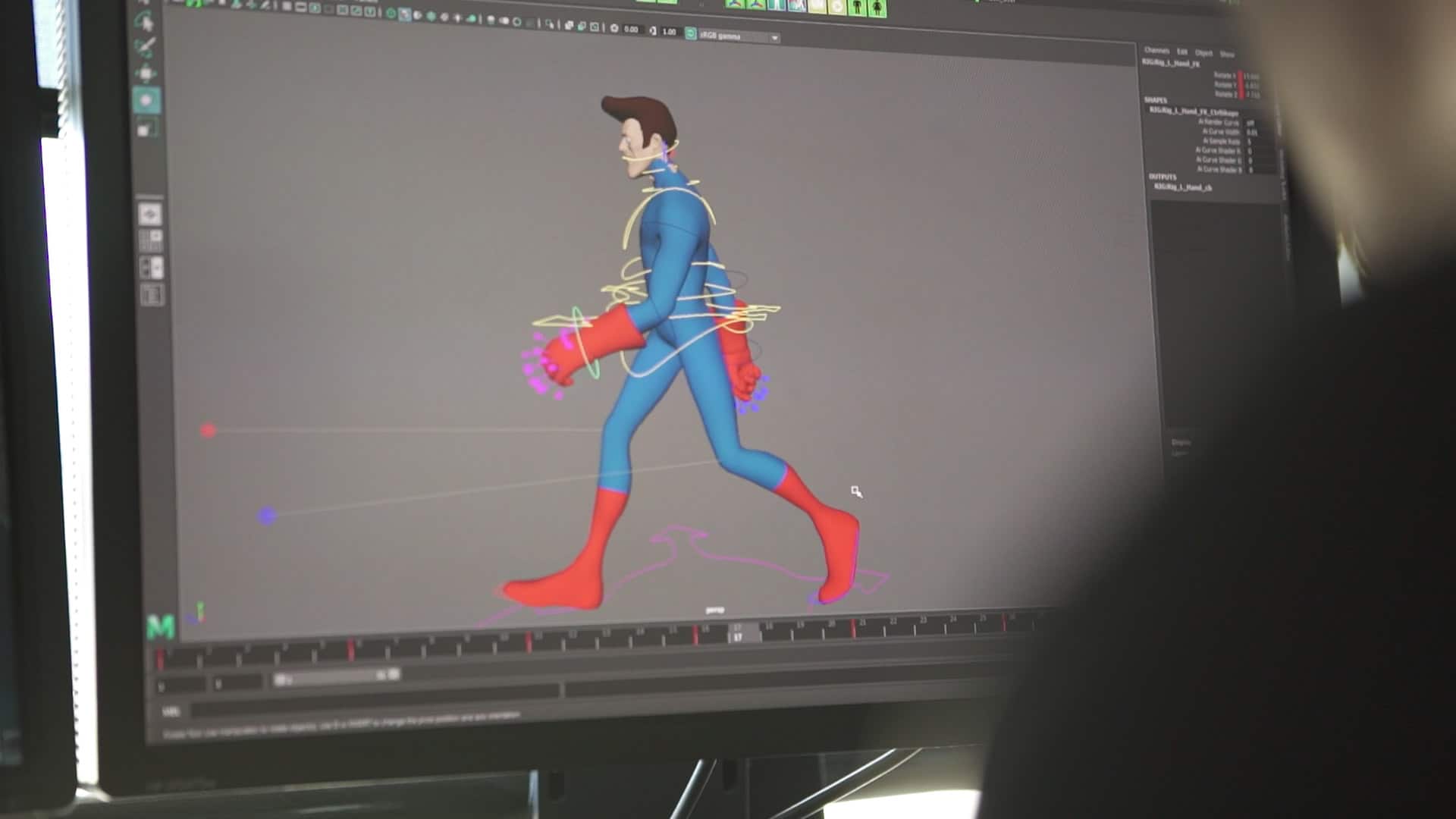
A 3D animator’s day typically begins with reviewing feedback on the previous day’s shots or clips. They then work in Maya or a similar package to develop animations from rough blocking through to refined final passes. In a game context, they will test their work in the game engine to assess how it reads in real-time. In a film or VFX context, they submit shots to a review pipeline and attend dailies sessions where their work is assessed by the animation lead or director. Reference gathering, whether filming themselves or sourcing real-world footage, is a regular part of the process throughout the day.
What is a typical day as a 3D Animator?
A 3D animator’s day typically begins with reviewing feedback on the previous day’s shots or clips. They then work in Maya or a similar package to develop animations from rough blocking through to refined final passes. In a game context, they will test their work in the game engine to assess how it reads in real-time. In a film or VFX context, they submit shots to a review pipeline and attend dailies sessions where their work is assessed by the animation lead or director. Reference gathering, whether filming themselves or sourcing real-world footage, is a regular part of the process throughout the day.
9:00 AM
Review dailies feedback notes on three character shots from yesterday; note specific timing and weight corrections requested
9:30 AM
Team standup — discuss the sequence schedule and confirm today’s shot priorities
9:45 AM
Open Maya: film a quick reference video of yourself doing the character’s reaching gesture; import and study it
10:15 AM
Begin blocking the reach animation using stepped keys — placing the key poses and checking the overall arc
12:00 PM
Lunch break
1:00 PM
Switch from stepped to spline keys; begin refining the timing in the graph editor — smooth out the overshoot on the hand
2:30 PM
Submit the shot to the review pipeline (ShotGrid) for the afternoon dailies session
3:00 PM
Dailies: review your shot and three others with the animation lead; receive notes on secondary motion in the character’s coat
3:45 PM
Apply notes: add subtle follow-through on the coat; adjust the finger curl timing for a more natural feel
5:00 PM
Submit revised shot; update task status in ShotGrid; watch a short animation reference video on hand gestures
What should I be able to do as a 3D Animator?
Skills
- Create character animations from blocking through to final polish in Maya
- Apply the 12 Principles of Animation to achieve believable movement
- Capture and use live-action reference footage to inform animation
- Set up and manage animation state machines in Unity or Unreal (games)
- Submit shots to a review pipeline and respond to director and lead feedback
- Process and clean up motion capture data
- Maintain character consistency across a sequence or production
Knowledge
- The 12 Principles of Animation and their application to both games and film
- Human and animal anatomy and biomechanics as they relate to movement
- Acting theory: motivation, physicality, and emotional expression
- Animation state machines and blend trees in game engines (games context)
- Feature film and VFX animation pipeline (film context)
- Maya animation tools: graph editor, dope sheet, NLA editor, and breakdown posing
- Differences between real-time game animation constraints and offline film animation
Typical salaries for 3D Animators in Australia
All salaries are approximates based on recently advertised positions in Australia.
$0k
Entry-level (0–3 years)
$0k
Mid-career (4–9 years)
$0k
Senior (10+ years)
Software used by 3D Animators
The software used for 3D animation is highly specialized. The more platforms you are trained in, the more valuable you will be to an employer. 3D animators may need knowledge of a combination of the following software.

Maya for 3D Modelling, rigging, animating, lighting and rendering

ZBrush for High-detail sculpting and texturing

Adobe Photoshop for Concept art and texture maps

Nuke for Compositing and match-moving

3D Equaliser for Compositing and match-moving

Renderman for rendering

Thinkbox for render farm management

Substance Suite for High detail materials and texturing

Houdini for Visual effects and animation

DaVinci Resolve for Colour grading & video editing
How to get a job as a 3D Animator
- Build an animation reel showing a variety of movement types: walk cycles, character acting, combat, and cutscenes
- Show your process — include reference analysis and blocking stages alongside final polished work
- Study acting: watch masterclasses and analyse performances in film and animation
- Apply for Screen NSW Animation and VFX Trainee Placement Program (film/VFX path)
- Contribute to game jam projects or student films to gain real production credits
- Submit work to industry critique communities for feedback
AIE courses for 3D Animators
Do you have what it takes to be a 3D Animator?
Read the points below and if these sound like you, 3D animation could be a great option!
- You are fascinated by how things move. You watch people, animals, and objects and notice weight, timing, and the way movement communicates personality.
- You find yourself studying animated films or games with attention to the animation specifically. You notice when a walk cycle feels off or when a moment lands perfectly.
- You have an interest in performance and acting. The best animators describe themselves as actors with a mouse and keyboard
- You are patient with slow, iterative, meticulous work. A single high-quality animation can take days of careful refinement.
- You are visually creative but also technically curious. Animation sits between art and technology.
- You are responsive to feedback. Animation is reviewed constantly, and direction will often require significant changes to timing, weight, or expression.
- You enjoy collaborative work. Animators work closely with designers, programmers, directors, and artists throughout a production.
The simplest test: watch a scene in an animated film or game you love and try to describe what the animator was doing and why — then try to replicate it. If that process excites you more than it exhausts you, you are already thinking like a 3D animator.
Hear from 3D Animators
What does a Roto Paint Artist do? Hear...
What does a Technical Artist do? Hear from...
From Classroom to Careers: AIE with VFX Alumni...
From Classroom to Careers: AIE with VFX Alumni...
3D Artist: AIE with William Minter...
VET in Schools: AIE with Paul Fogarty...
Art Director: AIE with Ryan McMahon...
Layout & Lighting Artists: AIE with Sophie Ienari...
Meet the VFX Team: Killing Time...

Meet the Junior Paint Artist: Vanessa Van Den...
Meet the Production Coordinator: Crystal Taylor...
On our way to working in the VFX...
My Journey into Mighty Kingdom Games – Phoebe...
My Journey into becoming a VFX Production Coordinator...
My Journey into Animation – Joshua Wood...
How to become a 3D Animator
- Bachelor of Game Development (Major in Game Art, includes animation) – AIE Institute (CRS1400953)
- Advanced Diploma of Professional Game Development (Game Art & Animation) – AIE (11151NAT)
- 3D Animation & VFX for Film – Advanced Diploma (CUA60620) – AIE
Upcoming Events
Discover more at one of our events
AIE runs campus and online events throughout the year and we encourage students to attend. AIE also broadcast regular livestreams with our alumni and industry professionals that provide insight into future career paths.
Open Day
November 21, 2026
Discover the courses designed to get you started in game development, 3D animation and visual effects at the AIE Open Day. Find out about full-time and part-time courses starting soon.
Starts at 10am
Roles related to 3D Animator in the industry
Find out more
Download our course guide to see how we can help you on your pathway to your dream career.
Get Your Course Guide and Take the First Step
There’s a lot more to explore in the full course guide, and our admissions team will be there to help if you have any questions.
"*" indicates required fields