
Visual Effects Artist
What does a Visual Effects Artist do and what you need to know to become one?
What does a Visual Effects Artist do?
A visual effects (VFX) artist creates the digital imagery that is composited into live-action footage in film, television, advertising, and streaming productions. VFX encompasses a wide range of specialisations including compositing, digital matte painting, motion graphics, particle effects, environment extension, creature integration, de-ageing, and destruction simulation. In Australia, the VFX industry is significant and growing, supported by the federal government’s Post, Digital and Visual Effects (PDV) Offset, which makes Australia internationally competitive for post-production work. Major VFX facilities in Sydney and Melbourne including Animal Logic, Fin Design + Effects, DNEG, and Rising Sun Pictures regularly employ local VFX artists on both Australian and international productions.
What is a typical day as a Visual Effects Artist?
A VFX artist’s day typically begins by checking the production tracking system for updated shot assignments and any feedback from the previous day’s client review. They then work within their specialisation — a compositor might spend the day integrating a digital creature into live-action plate photography, while an FX artist might be running simulations of an explosion and matching it to set reference. Regular dailies sessions, where completed shots are reviewed by the VFX supervisor, shape the work throughout the day. Revision cycles are tight, and meeting delivery deadlines is a constant priority.
9:00 AM
Check ShotGrid for overnight notes from the VFX supervisor on the three hero composite shots in progress
9:15 AM
Team standup — brief daily with the compositing team; confirm which shots are going to client review today
9:30 AM
Open Nuke: work on the creature integration shot — pulling the creature out of its separate render layers and placing it into the plate photography with correct lighting matching
12:00 PM
Lunch break
1:00 PM
ender takes about forty minutes; use the time to do a colour-matching pass on a second shot — match the grade of the background plate to the CG sky replacement
2:00 PM
Review renders from the queue; submit shots to the internal review session
2:30 PM
Dailies session with the VFX supervisor and two other compositors — review seven shots; receive notes on two, sign off on five
3:00 PM
Apply notes on shot 14B: adjust the rim-light intensity on the creature’s shoulder to better match the on-set reference photo
4:30 PM
Final render submitted; update ShotGrid status for both shots to “Pending Client Review”
5:00 PM
Read through documentation on a new Nuke gizmo shared by a senior artist; test it on a personal practice shot

What should I be able to do as a Visual Effects Artist?
Skills
- Composite CG elements into live-action footage with accurate light matching and colour integration
- Use Nuke for node-based compositing, keying, roto, and 2.5D work
- Run and art-direct particle, fluid, or destruction simulations in Houdini (FX specialisation)
- Create and paint digital matte paintings for environment extensions
- Work within a multi-layer render pipeline (render elements, EXR passes)
- Meet tight delivery deadlines and manage multiple shots simultaneously
- Communicate effectively with VFX supervisors and other departments
Knowledge
- Photography and cinematography: exposure, colour temperature, lens characteristics, and light behaviour
- Colour science: colour spaces, linear workflow, and LUT management
- Compositing theory: keying, rotoscoping, tracking, and node-based workflows
- CG rendering pipeline: render passes, AOVs, and how they are used in comp
- Australian PDV Offset and its role in attracting international productions
- VFX production pipeline from pre-production to final delivery
- Understanding of the full pipeline departments: modelling, rigging, FX, lighting, and comp
Typical salaries for Visual Effects Artist in Australia
All salaries are approximates based on recently advertised positions in Australia.
$0k
Entry-level (0–3 years)
$0k
Mid-career (4–9 years)
$0k
Senior (10+ years)
Software used by Visual Effects Artists
The software used for 3D animation is highly specialized. The more platforms you are trained in, the more valuable you will be to an employer. 3D animators may need knowledge of a combination of the following software.

Maya for 3D Modelling, rigging, animating, lighting and rendering

ZBrush for High-detail sculpting and texturing

Adobe Photoshop for Concept art and texture maps

Nuke for Compositing and match-moving

3D Equaliser for Compositing and match-moving

Renderman for rendering

Thinkbox for render farm management

Substance Suite for High detail materials and texturing

Houdini for Visual effects and animation

DaVinci Resolve for Colour grading & video editing
How to get a job as a Visual Effects Artist
- Build a showreel demonstrating compositing or FX work — quality matters far more than quantity
- Learn Nuke through free non-commercial licences and online tutorials; it is the industry standard
- Apply for Screen NSW Animation and VFX Trainee Placement Program
- Network through Grapevine Jobs, LinkedIn, and events hosted by VFX facilities in Sydney and Melbourne
- ontribute to short films or student productions to build credits and real pipeline experience
- Study photography, cinematography, and colour theory to develop your eye for integration
AIE courses for Visual Effects Artists
Do you have what it takes to be a Visual Effects Artist?
Read the points below and if these sound like you, a career as a VFX artist could be a great option!
- You are fascinated by how visual effects are achieved. When watching a film, you find yourself wondering how a particular shot was made.
- You have a strong eye for colour, light, and photographic realism. You notice when a CG element does not quite match its environment.
- You enjoy technically complex work that produces beautiful visual results. VFX is where art and technology intersect most directly.
- ou are patient with long rendering times, revision cycles, and iterative refinement. VFX work rarely reaches final quality quickly.
- You are detail-oriented. The difference between a convincing visual effect and an unconvincing one is often a very small number of decisions.
- You are curious about how light, physics, and cameras work in the real world. VFX requires you to simulate reality, which means understanding it first.
- ou are comfortable working in a deadline-driven environment where client feedback can require significant rework at short notice.
Visual effects is one of the most technically demanding creative disciplines in the screen industry. The learning curve is steep, but Australia has a world-class VFX industry with significant international production work flowing through it. If the challenge of making the impossible look real genuinely excites you, this is a highly rewarding career path.
Hear from Visual Effects Artists

Welcome to 2025 with AIE...
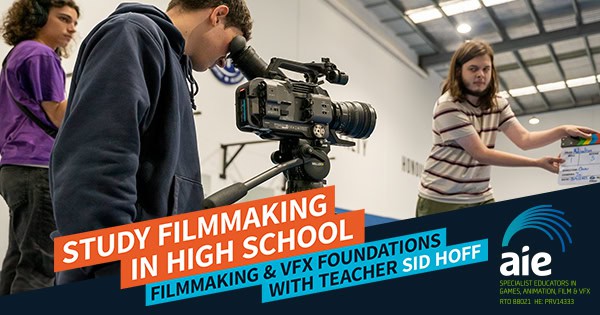
Study Filmmaking in High School...
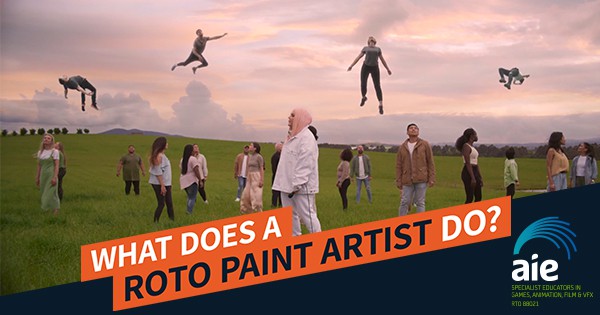
What does a Roto Paint Artist do? Hear...
Welcome to 2024 with AIE...
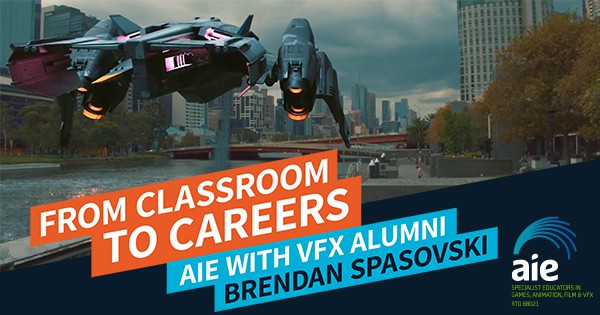
From Classroom to Careers: AIE with VFX Alumni...
From Classroom to Careers: AIE with VFX Alumni...
Welcome to 2023 with AIE...
VET in Schools: AIE with Paul Fogarty...
Filmmaker: MAPS at AIE with Connor Gurr...
Tracking & Matchmove Artist: AIE with Peter Lee...
Layout & Lighting Artists: AIE with Sophie Ienari...
Modelling & Texturing Artist: AIE with Luke Dadic...
Meet the VFX Team: Killing Time...
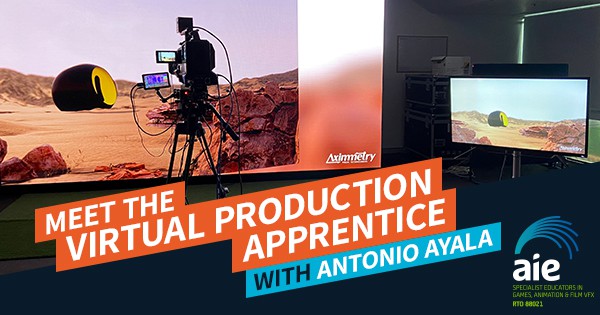
Meet the Virtual Production Apprentice: Antonio Ayala...

Meet the Junior Paint Artist: Vanessa Van Den...
Meet the Production Coordinator: Crystal Taylor...
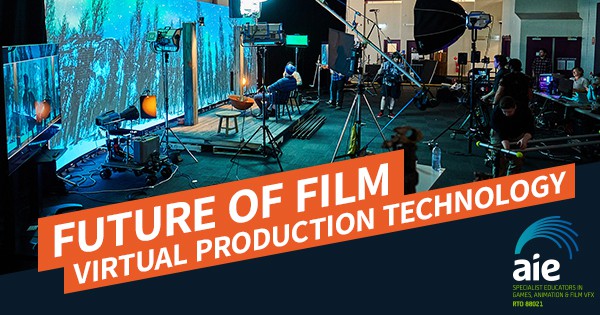
Future of Film – Virtual Production Technology: Matt...
Meet the Production Manager: Rebecca Mercurio...
Meet the Expert in Compositing: Mike Gordon...
Meet the 3D Modeler: Angela Sae-Lam...
Meet the VFX Project Manager: Michael Majchrzak...
The Journey of a Short VFX Animation –...
Navigating the VFX Industry with Yoav Dolev...
On our way to working in the VFX...
My Journey into Game Cinematics – Jacob King...
My Journey into becoming a VFX Production Coordinator...
My Journey into the Film Industry – Jake...
My Journey into Animation – Joshua Wood...
My Journey Into 3D Animation & VFX for...
How to become a Visual Effects Artist
- 3D Animation & VFX for Film – Advanced Diploma (CUA60620) – AIE
- 3D Animation Foundations – Certificate II in Creative Industries (CUA20220) – AIE
- 3D Animation for Beginners – short beginner course – AIE
Upcoming Events
Discover more at one of our events
AIE runs campus and online events throughout the year and we encourage students to attend. AIE also broadcast regular livestreams with our alumni and industry professionals that provide insight into future career paths.
Open Day
November 21, 2026
Discover the courses designed to get you started in game development, 3D animation and visual effects at the AIE Open Day. Find out about full-time and part-time courses starting soon.
Starts at 10am
Roles related to Visual Effects Artist in the industry
Find out more
Download our course guide to see how we can help you on your pathway to your dream career.
Get Your Course Guide and Take the First Step
There’s a lot more to explore in the full course guide, and our admissions team will be there to help if you have any questions.
"*" indicates required fields