
What does a Director do?
The director is the creative leader of a film or television production, responsible for translating a script or concept into a finished work. They guide the performances of actors, work with the cinematographer to establish the visual approach, collaborate with the production designer on the look of the world, and shape the pacing and tone of every scene. A director must have a unified vision of the entire work and the communication skills to convey that vision to dozens of collaborators working in parallel. In Australia, directors work across feature films, television drama, documentary, advertising, and increasingly across virtual production and interactive formats.
What is a typical day as a Director?
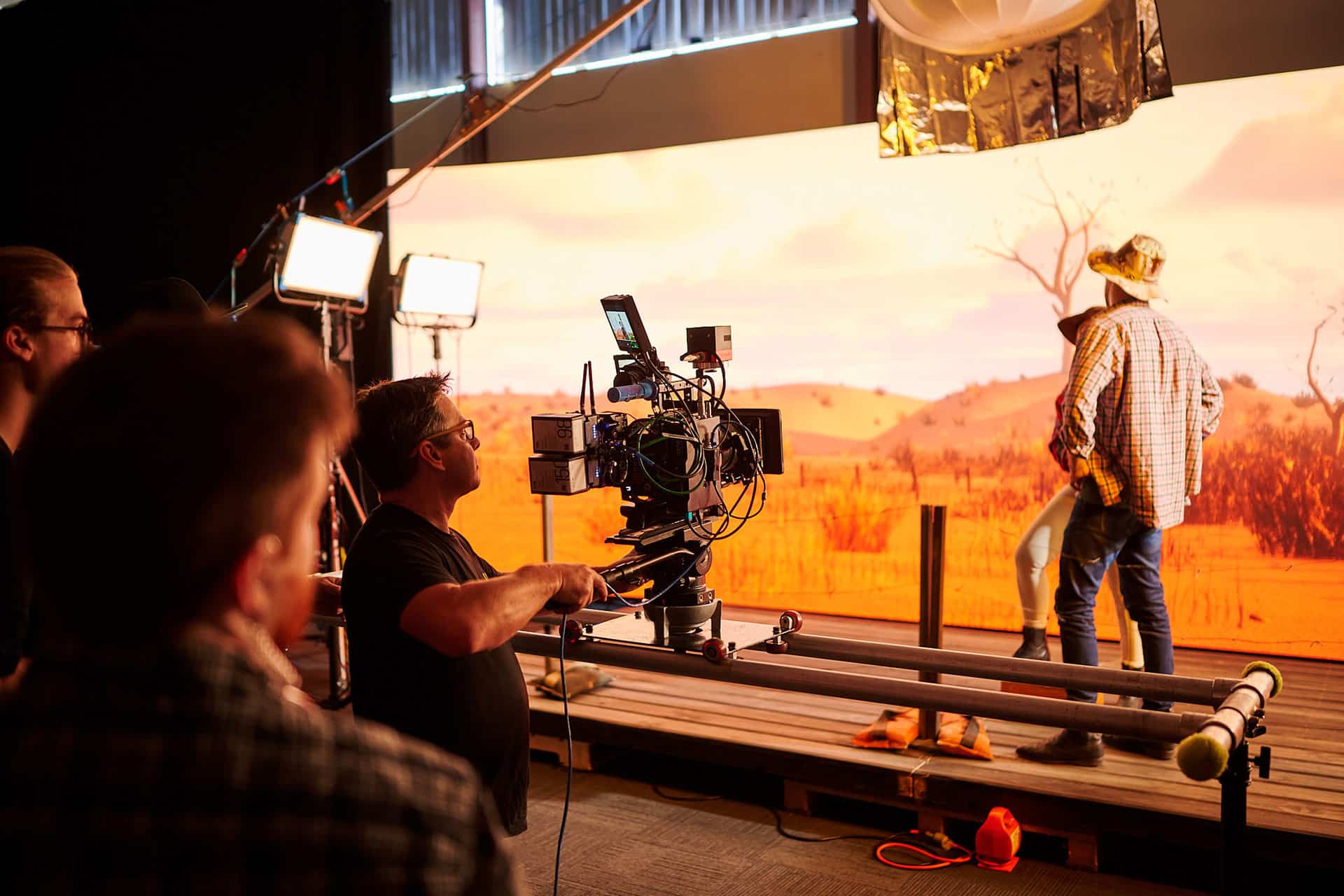
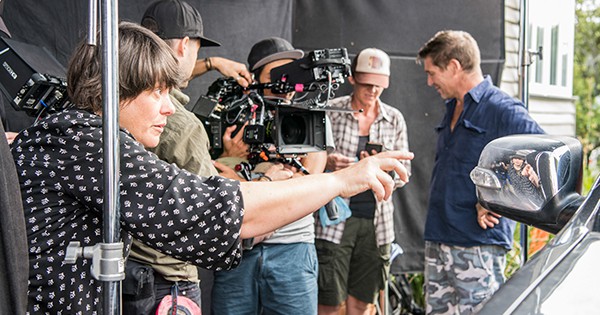
In pre-production, a director’s days are filled with meetings: reviewing storyboards, discussing locations with the production designer, running casting sessions, and refining the script. During production, the director arrives on set to review the overnight setup, works through each scene with the actors, consults with the DOP on camera placement, and oversees takes until a satisfying performance and coverage are achieved. Post-production involves editing sessions with the editor, sound mixing reviews, and VFX approval. Directors are involved at every stage and their vision must remain consistent throughout months of work.
7:30 AM
Arrive on set before crew call; walk the location with the DOP to finalise blocking for the first scene
8:00 AM
Crew call — brief the first assistant director on the day’s schedule priorities and any safety considerations
8:30 AM
Rehearse the first scene with the two lead actors; discuss character motivation and adjust blocking
9:30 AM
Camera rolls on first setup — oversee three takes, adjusting performance notes between each
12:30 PM
Lunch break
1:30 PM
Afternoon scenes: two additional setups, including a wide master and a close-up coverage set
4:00 PM
Review video village playback with the DOP; approve two takes from the morning for editorial
5:30 PM
Wrap — brief the 1st AD on the next day’s call sheet priorities; notes session with the script supervisor
7:00 PM
Review edited assembly cut of yesterday’s footage on a tablet; send notes to the editor for tomorrow
What should I be able to do as a Director?
Skills
- Develop and communicate a clear creative vision for a project
- Direct actors to deliver strong, authentic performances
- Collaborate with the DOP on visual planning and execution
- Make rapid creative decisions under time and budget pressure
- Conduct pre-production prep: breakdowns, storyboards, shot lists, rehearsals
- Work with editors, sound designers, and VFX supervisors in post-production
- Pitch projects to commissioners, broadcasters, and producers
Knowledge
- Storytelling theory: three-act structure, character arcs, and visual narrative
- Directing actors: performance theory, rehearsal techniques, and feedback methods
- Visual language: camera angles, movement, montage, and mise-en-scene
- Australian screen funding mechanisms: Screen Australia, state agencies, co-productions
- Film and television production workflows from development to delivery
- Post-production: editing theory, sound design, and VFX approval processes
Typical salaries for Director in Australia
All salaries are approximates based on recently advertised positions in Australia.
$0k
Entry-level (0–3 years)
$0k
Mid-career (4–9 years)
$0k
Senior (10+ years)
Software used by Directors
The software used by Directors is highly specialized. The more platforms you are trained in, the more valuable you will be to an employer. 3D animators may need knowledge of a combination of the following software.

DaVinci Resolve for Colour grading & video editing

Houdini for Visual effects and animation
How to get a job as a Director
- Direct short films and enter them into Australian short film festivals
- Develop a clear visual style visible across all your work
- Build relationships with writers, producers, and cinematographers early in your career
- Apply for Australian state and federal screen agency development funding
- Work in other roles on set (runner, director's attachment) to understand production from all angles
- Submit to Screen Australia's emerging filmmaker programs
AIE courses for Directors
Do you have what it takes to be a Director?
Read the points below and if these sound like you, directing could be a great option!
- u have strong, clear opinions about stories and how they should be told. You respond to films not just emotionally but analytically.
- You are a natural communicator and leader. People naturally listen to you and respond well to your direction in group situations.
- You are drawn to the full range of storytelling: character, structure, visuals, sound, and performance.
- You have a high tolerance for pressure and uncertainty. Production involves constant problem-solving and the director must remain decisive.
- You are genuinely interested in performance and working with actors.
- You are a voracious consumer of film and television across different cultures, eras, and genres.
- You are comfortable with the weight of final creative responsibility. The director's decisions shape everything.
The most important thing you can do now is make things: short films, even on a phone, with friends, in any location you can find. The experience of being responsible for the whole of a production is irreplaceable, and every working director started by making something small.
Hear from Directors
Behind the Scenes with Jake: Working on Netflix,...

Welcome to 2025 with AIE...
The Best of 2024...
The Student Experience: Studying at AIE...
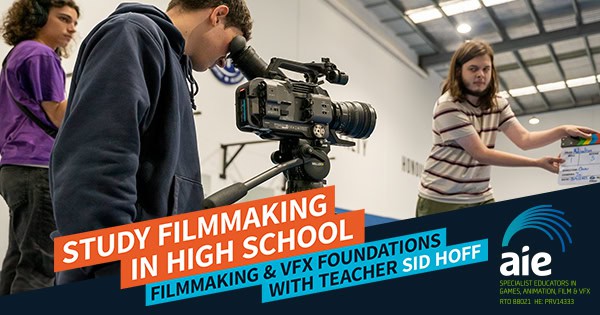
Study Filmmaking in High School...
Welcome to 2024 with AIE...
Welcome to 2023 with AIE...
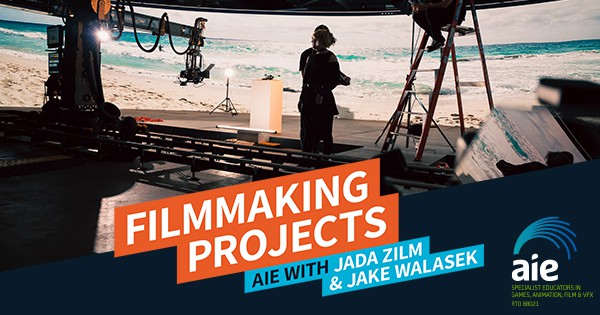
Filmmaking Projects: AIE with Jada Zilm and Jake...
Filmmaker in the making: AIE with Michael Liehne...
Filmmaker: MAPS at AIE with Connor Gurr...
Tracking & Matchmove Artist: AIE with Peter Lee...
Modelling & Texturing Artist: AIE with Luke Dadic...
Film & Virtual Production with MAPS at AIE...
Meet the VFX Team: Killing Time...
Meet the Virtual Production Apprentice: Antonio Ayala...

Meet the Junior Paint Artist: Vanessa Van Den...
Meet the Production Coordinator: Crystal Taylor...
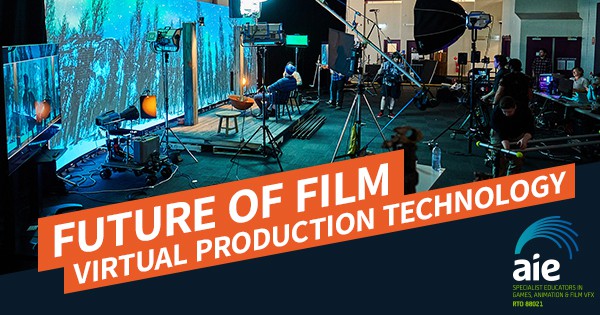
Future of Film – Virtual Production Technology: Matt...
Meet the Production Manager: Rebecca Mercurio...
The Journey of a Short VFX Animation –...
My Journey into 3D Surfacing – Tim Box...
My Journey into the Film Industry – Jake...
My Journey Into 3D Animation & VFX for...
How to get started as a Director
- Filmmaking – Advanced Diploma (CUA60620) – AIE
- Filmmaking Foundations – Certificate III in Visual Arts (CUA31120) – AIE
- Filmmaking for Beginners – short beginner course – AIE
Upcoming Events
Discover more at one of our events
AIE runs campus and online events throughout the year and we encourage students to attend. AIE also broadcast regular livestreams with our alumni and industry professionals that provide insight into future career paths.
Open Day
November 21, 2026
Discover the courses designed to get you started in game development, 3D animation and visual effects at the AIE Open Day. Find out about full-time and part-time courses starting soon.
Starts at 10am
Roles related to Director in the industry
Find out more
Download our course guide to see how we can help you on your pathway to your dream career.
Get Your Course Guide and Take the First Step
There’s a lot more to explore in the full course guide, and our admissions team will be there to help if you have any questions.
"*" indicates required fields