
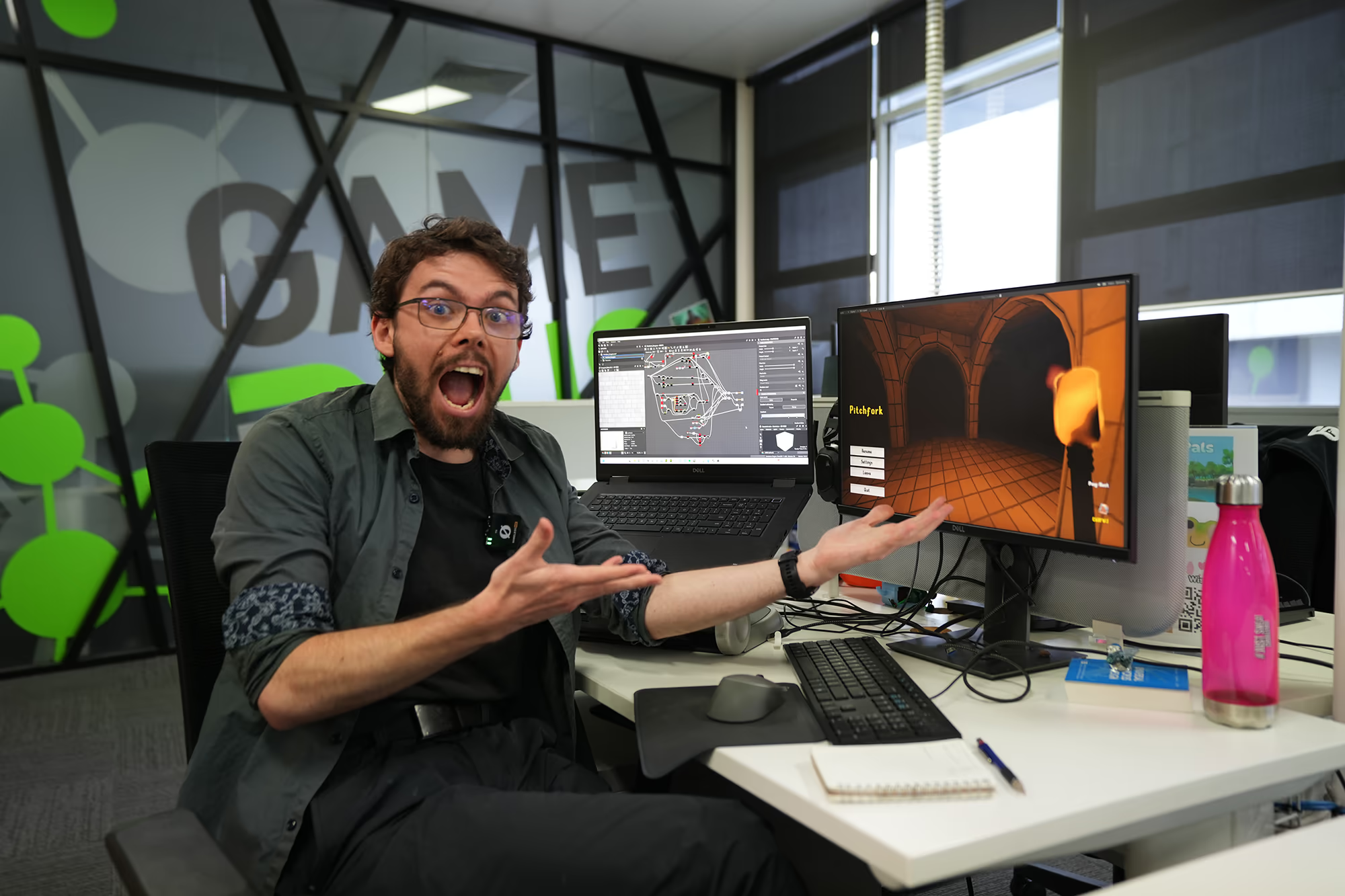
For AIE alumnus Alex O’Dea, game development sits at the intersection of creativity and technology.
Now a technical artist at Manic Games, Alex originally studied 3D art at AIE, developing skills across character creation, environments and the traditional 3D art pipeline. During his studies, however, he found himself increasingly interested in the technical side of creating games.
“I studied 3D art at AIE a few years ago. I did all the normal stuff like making characters and environments, but I ended up being more interested in the technical art perspective,” Alex explains.
Technical art bridges the gap between artists and programmers. Depending on the project, a technical artist might work with shaders, visual effects, character rigs, lighting, or tools that help artists work more efficiently.
“Technical art is an interesting field because it mixes both being an artist and being a programmer,” Alex says. “You need to have the creative and visual brain and also have the technical brain.”
For students interested in combining art and technology, AIE offers pathways across game art, animation, game programming and game design, giving aspiring creators opportunities to develop skills across different areas of the games industry.
Creating atmosphere through technical art
Alex is currently putting these skills into practice while developing Pitchfork, a procedural dungeon crawler with a dark, grungy visual style.
One of the project’s defining features is its lighting. Alex wants players to feel uncertain about what might be hiding within the game environment.
“The lighting is sort of supposed to give you a bit of a sense of fear and confusion,” he says. “You’re not supposed to know exactly what you’re seeing.”
Using Unity’s Shader Graph alongside custom code, Alex created a distinctive pixelated lighting system. Because Pitchfork’s dungeons are procedurally generated, this system also needs to consider game performance.
Rather than filling environments with large numbers of lights, Alex has modified how individual lights behave, allowing them to illuminate more of an environment while maintaining the dark atmosphere he wants.
It’s a great example of the role technical artists play – balancing creative ideas with the technical requirements of a game.
Students interested in the programming side of game development can also explore AIE’s Game Programming course and Game Engine Scripting Foundations to learn more about the technical skills used to bring interactive experiences to life.
Building worlds and characters
Alex’s work also extends into character rigging and environment art.
“A rig is basically the 3D puppet that an animator will use when they create animation for a game or a film,” Alex explains.
Using tools including Maya and ZBrush, he can create characters before developing the bones and controls that allow animators to move them. Technical systems can also simplify repetitive tasks, such as keeping a character’s hand connected to a weapon throughout an animation.
His 3D art background is equally important when creating Pitchfork’s environments.
The game’s procedural dungeons are constructed from modular walls, floors, stairs, pillars and other assets designed to connect in different combinations.
“When you’re making environments that are modular, you’re basically putting together LEGO pieces,” Alex says.
Alex also uses Adobe Substance 3D Designer to create textures, allowing materials to be adjusted and reused throughout the game.
For those interested in developing similar skills, AIE’s Game Art and Animation course provides a pathway into the artistic side of game development, while the Game Art Foundations course introduces foundational skills for aspiring game artists.
From shaders and lighting to rigging and modular environments, Alex’s work demonstrates the multidisciplinary nature of technical art.
His journey from studying 3D art at AIE to exploring the technical side of game development highlights where creative and technical skills can lead – and how understanding both can help bring virtual worlds to life.
You can also explore AIE’s Technical Artist alumni story to hear another perspective on the role and career opportunities available in technical art.
For students considering a career in the games industry, AIE’s Game Career Paths resource is another useful starting point for exploring different roles across game development.
Q&A: Technical Art and Game Development
A technical artist works between the creative and technical sides of game development. Depending on the project, their work can include shaders, lighting, visual effects, character rigging, tools and systems that help artists work more efficiently.
Technical artists need a combination of creative and technical skills. Alex describes the role as requiring both a visual and creative mindset alongside technical and programming knowledge.
Alex studied 3D art at AIE, where he developed skills in areas such as character creation and environment art. During his studies, he became increasingly interested in the technical side of game development and eventually moved towards technical art.
Alex discusses using Unity’s Shader Graph and custom code for Pitchfork. His 3D workflow also includes Maya, ZBrush and Adobe Substance 3D Designer.
Character rigging involves creating the bones, controls and systems that allow a 3D character to be animated. Alex describes a rig as essentially a 3D puppet that an animator can use to create animation.
Modular environment design involves creating reusable pieces such as walls, floors, stairs and pillars that can be combined in different configurations. Alex compares the process to putting together LEGO pieces.
Technical art can be a strong fit for people interested in both creative and technical problem-solving. The role combines visual development with programming, tools and technical systems, making it a multidisciplinary career within game development.
AIE offers courses across game art, animation, programming and game development. Students can explore options such as Game Art and Animation, Game Programming and Game Development Foundations depending on their interests and experience.
Game development includes many different roles, including game artists, character artists, game programmers, gameplay programmers, level designers and game designers. AIE’s career paths resources can help prospective students explore the different directions available.